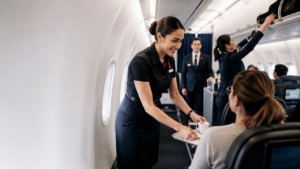
If you are exploring aviation careers in Canada, chances are you might be exploring two popular career paths as well; airport operations and flight attendant. Both offer rewarding career choices, but they attract very different personalities, strengths, and career goals.
So instead of asking, “Which one pays more?” or “Which one sounds cooler?” ask a better question:
“Which role fits the way you naturally like to work?”
Let’s understand this.
Two Aviation Careers. Two Completely Different Experiences.
Although both careers are part of the same industry, your day-to-day life will look very different.
| Airport Operations | Flight Attendant |
| Keeps the airport running safely and efficiently | Keeps passengers safe and comfortable during flights |
| Works with airlines, ground crews, airport authorities, and security teams | Works directly with passengers and cabin crew |
| Mostly airport-based | Travels on domestic and international routes |
| Focuses on coordination, planning, compliance, and problem-solving | Focuses on safety, communication, hospitality, and emergency response |
One role manages the airport behind the scenes, and the other one represents the airline in the cabin.
What Does an Airport Operations Professional Actually Do?
Airport operations is the control centre that keeps thousands of moving parts connected.
A typical day in the job involves coordinating aircraft turnaround times, monitoring airside activities, ensuring safety regulations are followed, assisting during weather disruptions, working with airline teams, and helping airport departments stay on schedule.
If you’re interested in an airport operations course in Canada, you’ll study topics such as:
- Aviation regulations
- Airside and landside operations
- Airport safety and security
- Passenger service management
- Leadership and airport administration
- Airline coordination
At Eton College, students complete 1040 hours of instructor-led learning training across 22 courses, building both operational knowledge and leadership skills before entering the industry.
What Does a Flight Attendant Really Do?
Many people assume that a career as a flight attendant is only limited to serving meals or greeting passengers.
In reality, that’s only one part of the job. Their first responsibility is safety.
Flight attendants are trained to manage emergency situations, assist passengers during unexpected events, communicate clearly under pressure, and maintain a calm and composed environment from take-off to landing.
Their role also includes working with multicultural passengers, adapting to any changes in schedules while creating a positive travel experience.
A quality flight attendant course in Canada prepares students in:
- Aviation safety procedures
- Emergency response
- In-flight service
- Communication skills
- Cultural awareness
- Airline regulations
Eton’s flight attendant program includes 336 hours of instructor-led training across seven comprehensive courses, designed specifically for aspiring cabin crew professionals.
Salary and Career Growth in Canada
Compensation varies depending on location, employer, experience, and airline or airport authority, but both careers offer opportunities for long-term progression.
| Career | Entry Opportunities | Future Growth |
| Airport Operations | Operations Assistant, Airport Coordinator, Duty Officer Support | Airport Supervisor, Operations Manager, Terminal Manager |
| Flight Attendant | Cabin Crew, Regional Airline Flight Attendant | Senior Cabin Crew, Cabin Manager, Inflight Trainer, Recruitment, or Service Management |
Airport operations often provide a structured management pathway, while cabin crew careers can lead into airline leadership, training, customer experience, or recruitment.
For students looking for airline job training in Canada, both options provide valuable entry points into the aviation industry.
Which Career Matches Your Personality?
Let’s understand this question with more clarity than comparing salaries.
Airport operations may suit you if you:
- Enjoy organising complex systems
- Stay calm during busy situations
- Like planning and coordination
- Prefer operational leadership over customer-facing roles
- Want to build a long-term management career within airports
Flight Attendant may suit you if you:
- Love meeting new people
- Communicate confidently
- Stay composed under pressure
- Enjoy travel and changing routines
- Take pride in helping others feel comfortable and safe
The best choice usually feels like an extension of your natural strengths.
Start the Career That Fits You
The aviation industry needs professionals that are both inside the terminal and inside the aircraft. Airports can not function without skilled operations teams, and airlines cannot succeed without well-trained cabin crew.
If you’re someone who enjoys coordination, planning, and leadership, an airport operations course in Canada can open exciting opportunities for you.
And if you love to thrive on communication, travel, and creating memorable passenger experiences, a flight attendant course in Canada can prepare you for life in the cabin.
The runway might be the same, but your journey starts with choosing the role that feels right for you.